
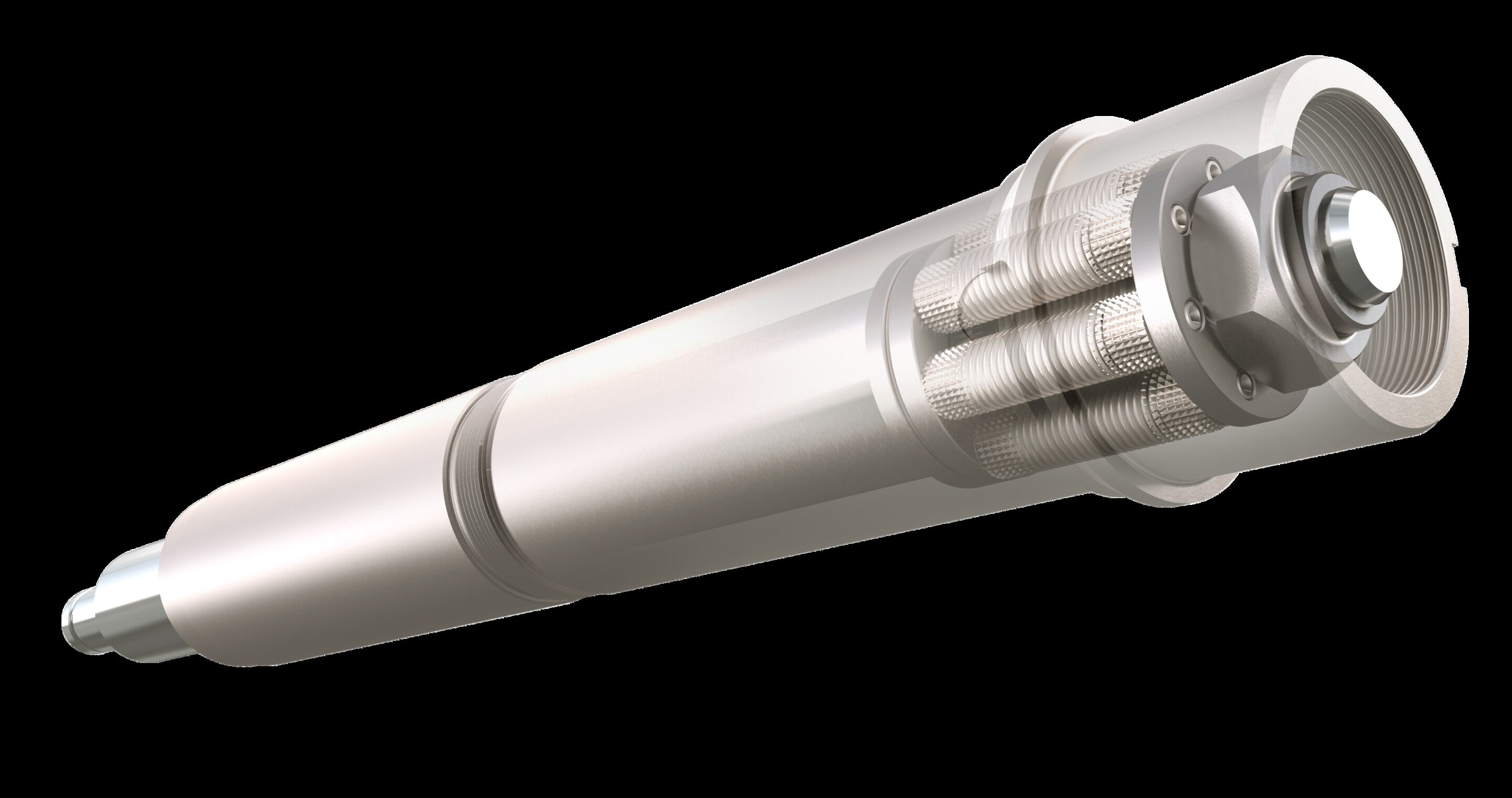
Roller Screws

Why Roller Screws?
Roller screws are at the core of our electric actuator products, converting rotary motion of the electric motor to linear motion of the actuator. They are similar in principle to a screw and nut; however, instead of components sliding relative to one another, they roll. This rolling reduces friction and heat, creating a much more efficient and robust mechanism. Originally patented in the 1940s and 1950s, their usage has been limited due to the high cost and complexity of their manufacturing.

Roller screws have several advantages over ball screws. A greater number of contact points provides significantly higher dynamic load capacity and higher tolerance to shock loads. Their design results in increased rigidity and durability, with up to fifteen times longer lifespan than a similar sized ball screw. Components are high-tolerance, complex, and require specialized machinery and tooling to manufacture. The math that determines their geometry and tolerances is also quite sophisticated.