Description
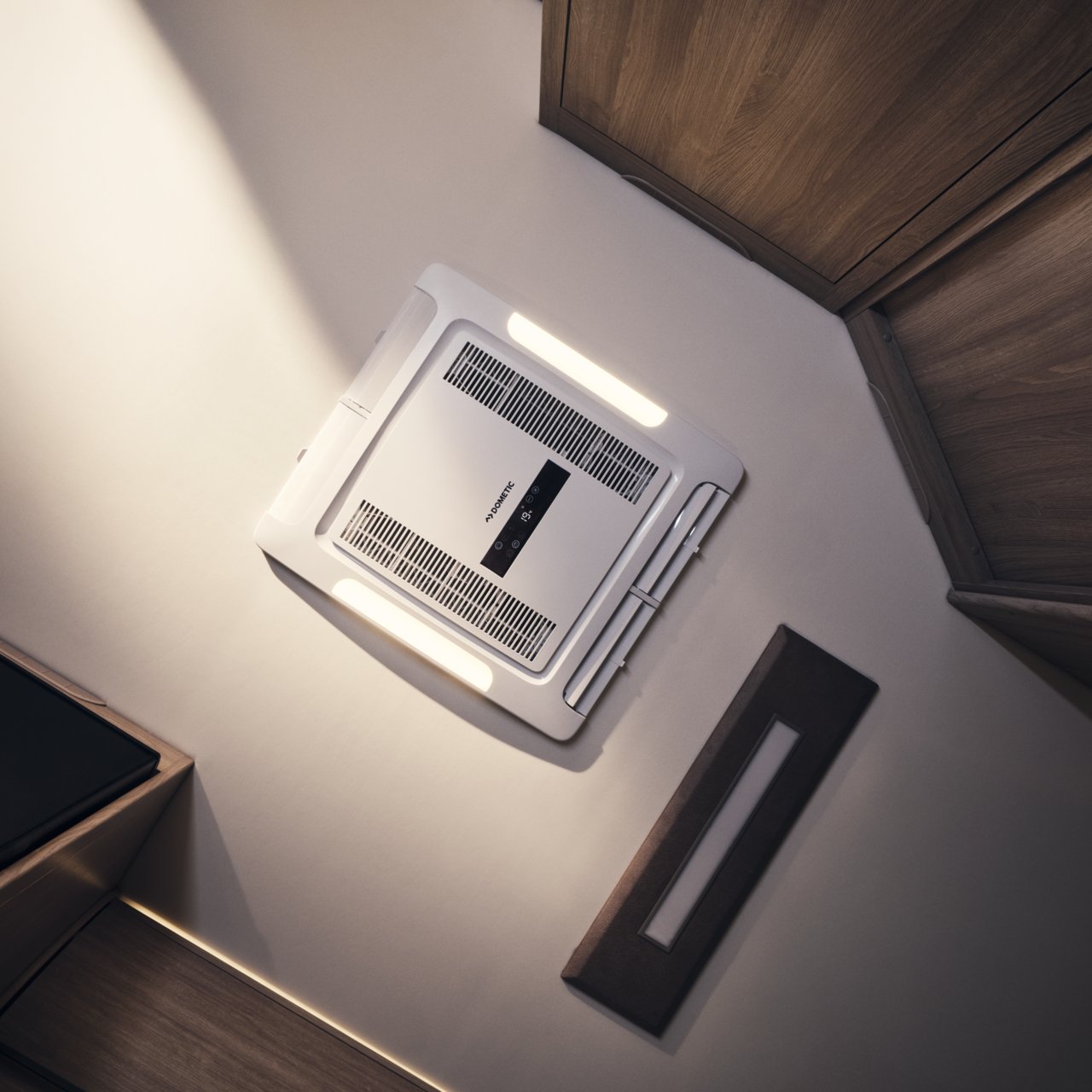
- Optimeret luftgennemstrømning giver øget effektivitet og mindre støj
- Integreret display med berøringsbetjening – det eneste på markedet
- Integreret belysning – varme hvide LED'er, som giver blød baggrundsbelysning
- Lodret justerbare ventilationsåbninger, der muliggør individuel regulering af luftstrømmen
- CleanAir-luftrensningssystem – holder din campingvogn frisk og ren
- Design med lav profil (kun 68 mm høj) giver mere loftshøjde i kabinen
- Genanvendeligt støvfilter – nemt at fjerne, når det skal rengøres
Specifications
SKU: 9600051008
| Model | FJXADBD |
|---|---|
| Scope of delivery | ADB, Manuals, Remote control, installation material |
| SKUCertificates | CE;UKCA;ECER10;EMC;CB |
| Product Description | Luftfordelingsboks, elektronisk betjening, LED-belysning |
| Dimensions product depth, [mm] | 579 |
|---|---|
| Dimensions product height, [mm] | 48 |
| Dimensions product width, [mm] | 518 |
| Net weight, [kg] | 3.90 |
| Cut out depth, [mm] | 400 |
| Cut out width, [mm] | 400 |
| Connectivity Type | Bluetooth |
|---|
| Dimensions parcel depth, [mm] | 630 |
|---|---|
| Dimensions parcel height, [mm] | 140 |
| Dimensions parcel width, [mm] | 550 |
| Parcel weight, [kg] | 6 |


Highlights
Optimeret luftgennemstrømning
Luftfordelingsboks med lav profil og kraftig luftgennemstrømning foran og bagpå
Intuitiv berøringsbetjening
Indstil nemt den temperatur og det blæsertrin, du ønsker
CleanAir-teknologi
Reducerer effektivt bakterier og ubehagelige lugte
Justerbare ventilationsåbninger
Enkel justering af luftgennemstrømningens retning med fingerspidserne
Integreret belysning
Varme hvide LED'er skaber et smukt, blødt omgivende lys
Genanvendeligt støvfilter
Nemt at fjerne, når det skal rengøres
Dometic Climate App
Praktisk styring af dit tagklimaanlæg fra din smartphone
Dometic CleanAir luftrenser
Vores nye luftrensningssystem bruger avanceret bipolær ioniseringsteknologi, som får din campingvogn til at dufte frisk og ren, samtidig med at det effektivt reducerer allergener, virusser, bakterier og forurenende stoffer. Ionisatorer renser luften ved hjælp af flere metoder. For det første skaber de positive og negative ioner, der hjælper med at reducere bakterier, lugte og mug. Bakterier og virusceller berøves deres livsvigtige brint, hvilket reducerer mængden af dem. For det andet reduceres lugte, når de oxiderer ved kontakt med de ladede ioner. Sidst, men ikke mindst, knytter de positive og negative ioner sig til partiklerne i luften. Deres tiltrækningskraft gør partiklerne større. Dette gør det muligt for dit klimaanlægs standardstøvfilter at fjerne flere partikler fra luften.
2 questions
If you are travelling to cooler climates then this will not challenge the air conditioners to the extremes, a unit with a smaller power rating will do for these types of trips. You should not save on power, though, if you regularly travel to warmer climates and even less so if you have children or pets on board as staying in a recreational vehicle can quickly become uncomfortable on a hot summer day. When the nights are not cooler either, rest and recuperation is only possible with an adequate air conditioner.
Air conditioners work on basically the same principle as the cooling units of kitchen refrigerators. Their cooling efficiency is way higher though. In either system a refrigerant extracts heat from the space to be cooled and dissipates it to the outside. An RV air conditioner should additionally reduce the humidity. AC systems most commonly used for recreational vehicles:
Evaporation systems: Water is vapourised in a roof-mounted unit and collected in a filter. A fan draws ambient air in through the filter, which results in a heat exchange. Benefits: low current consumption, lightweight. Drawback: The energy efficiency depends on the ambient humidity; so the performance of the system varies. It drops when the humidity is > 85% – and that's exactly the level where air conditioning is needed. Moreover, evaporation systems will, by nature increase the humidity in the vehicle, regardless of the ambient conditions.
The temperature conditions in recreational vehicles and the reasons behind them RV and caravans are no houses and they don't have thick walls, even if they are reasonably insulated they will heat up in the sun. The temperature inside can quickly rise to 30°C or more and not only in the hot and sunny south, but also in moderate climate zones. Besides insulation, the temperature conditions inside the vehicle depend on other factors, too: the size and number of windows, for instance. A caravan with small windows will heat up less quickly than a RV with generously sized glass surfaces and it does of course matter where you park your vehicle – in the blazing sun or in the shade of a tree. Do you take every opportunity to air the vehicle out? Or are all the windows closed and the heat can spread throughout the interior?