
Whether you’re a die-hard angler chasing offshore trophies or a family looking for a peaceful sunset cruise, there is one universal "fun-killer" on the water: vessel roll. That constant side-to-side tipping doesn't just make it hard to walk on deck; it’s the primary cause of seasickness and fatigue.
Recent breakthroughs in gyro stabilization—like the new Dometic DG3—have made it possible to eliminate up to 95% of boat motion. Once reserved for mega-yachts, this technology is now a game-changer for recreational boaters.
TL;DR: The Quick Specs on Gyro Stabilization
Feature | Benefit |
|---|---|
Roll Reduction | Up to 95% reduction in side-to-side motion. |
Primary Tech | High-speed flywheel in a vacuum-sealed hemisphere. |
Best For | 23ft+ powerboats, especially deep-vee hulls and catamarans. |
Key Advantage | Works while drifting, at anchor, or trolling (when you need it most). |
What is a Marine Gyro Stabilizer?
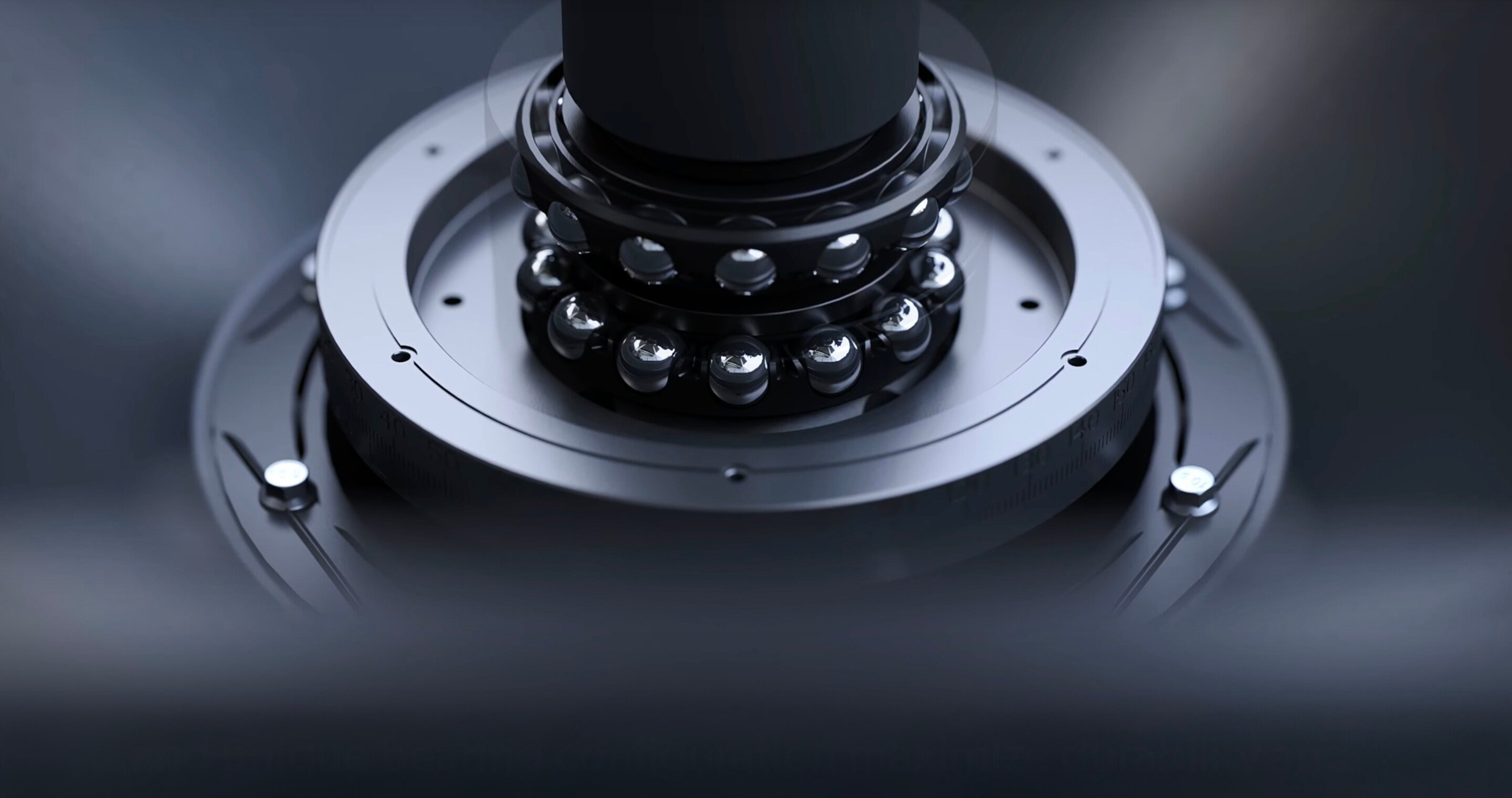
At its core, a gyro stabilizer is a high-tech machine that uses angular momentum to fight the sea. Inside the unit, a heavy flywheel spins at incredible speeds—up to 9,750 RPM—within a vacuum-sealed environment to reduce friction. Advanced gyro stabilizers like Dometic’s DG3 can achieve superior stabilization at just half the speed (4,750 RPM)
How the "Magic" Works (The Physics)
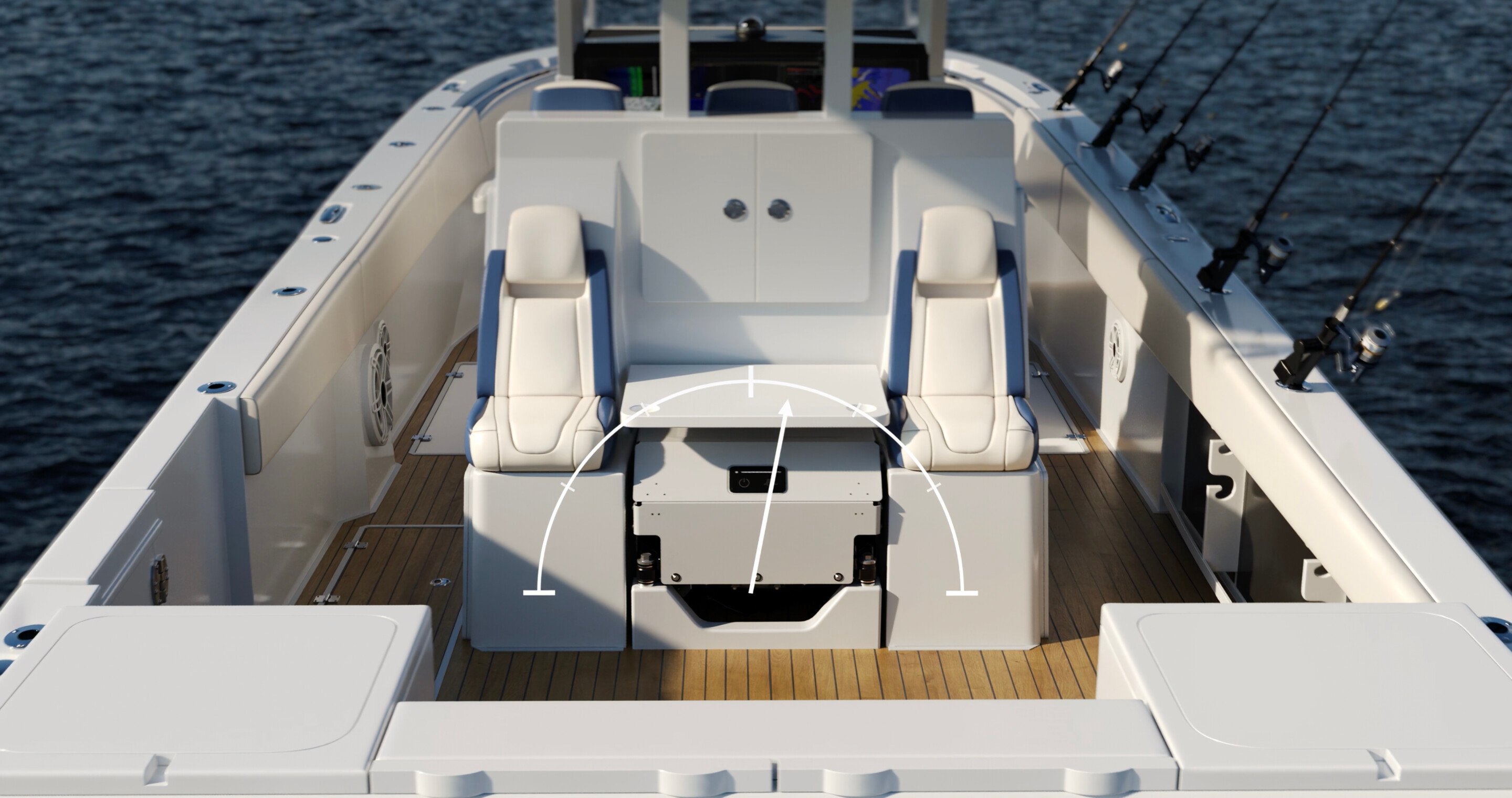
When a wave tries to tilt your boat to the left or right, the spinning mass of the gyro resists that change in orientation. Through a process called precession, the gyro tilts forward or backward to create a counter-balancing force.
The Result: Your boat stays level with the horizon.
The Difference: While your boat will still rise and fall with the height of the waves (pitch), it stops the exhausting side-to-side "snap" (roll).
Why Your Boat Needs Stabilization
Different hull types face unique challenges that a gyro is uniquely equipped to solve:
1. Deep-Vee Offshore Hulls
Deep-vee boats are designed to slice through chop at high speeds. However, when they slow down to troll or drop anchor, that steep "deadrise" makes them prone to heavy rolling. A gyro keeps these platforms rock-solid for anglers and divers.
2. Power Catamarans
While cats are famous for a smooth ride, they can suffer from "hull slap" in beam seas (waves from the side). This happens when one hull is lifted and then dropped sharply back into the water. A gyro minimizes this tilt, keeping both hulls level and quiet.
The Dometic Difference: Engineering the DG3
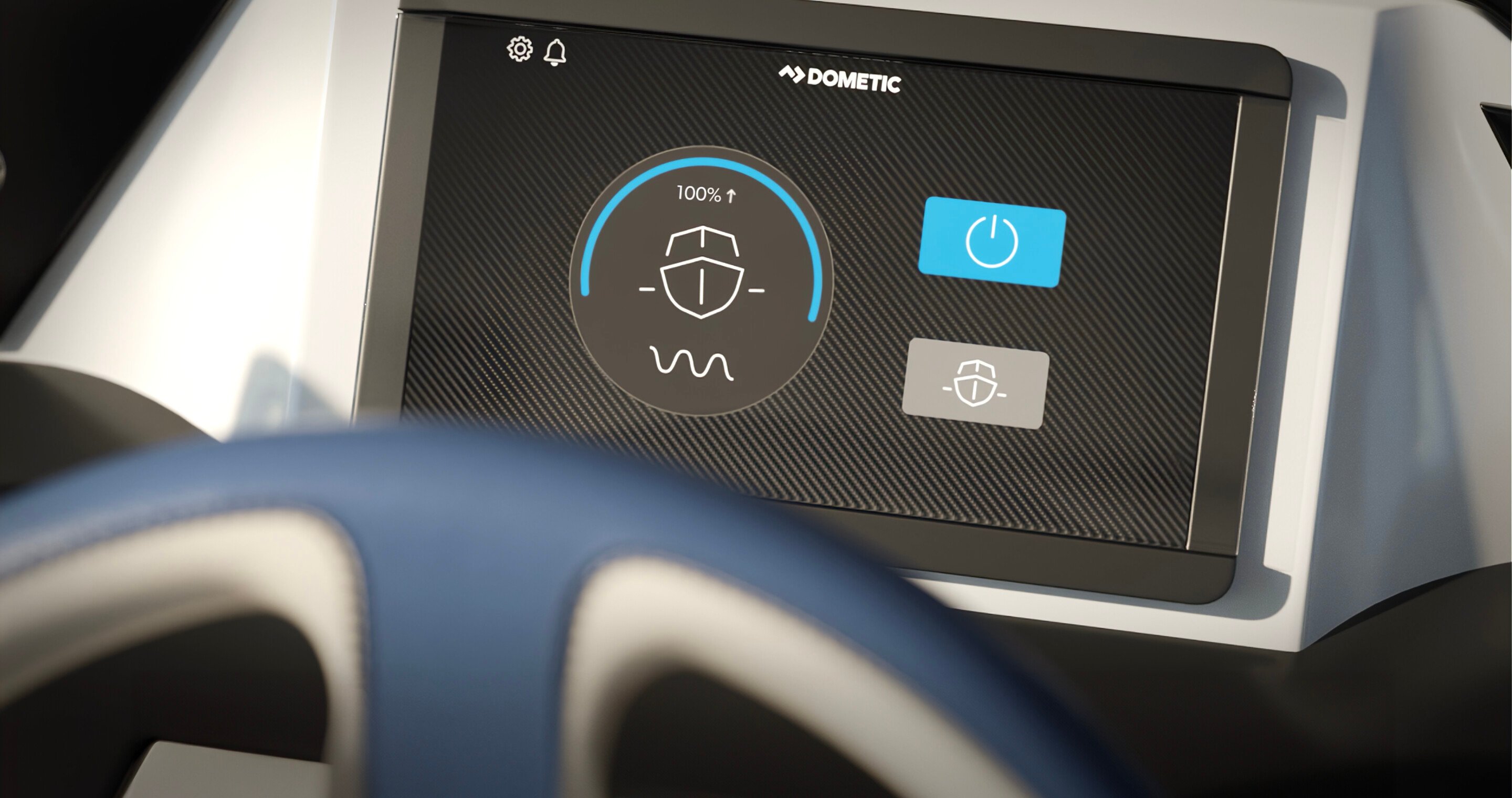
The Dometic DG3 was specifically engineered for the 35- to 41-foot offshore market—the "sweet spot" of modern boating. We focused on solving the traditional headaches of gyro ownership:
Smarter Physics: The DG3 creates massive angular momentum at just 4,750 RPM—nearly half the speed of competitors—leading to less wear and tear.
Durability: By using larger bearings and superior cooling, we’ve lowered the long-term cost of ownership and reduced maintenance downtime.
Factory Integration: Leading builders like Robalo are now installing the DG3 as standard equipment on flagship models like the R35 Center Console.
Gyro vs. Fin Stabilizers: Choosing the Right Protection Against Roll
Another option on the market is fin stabilizers, which utilize external underwater "wings" to create lift and counteract motion. While these systems are a traditional choice for larger vessels, they differ significantly from gyro technology in how they handle the "rock-and-roll" of the sea. While a gyro like the Dometic DG3 uses an internal spinning flywheel to provide a balancing force even when the boat is stopped or at anchor, fin stabilizers generally require the boat to be moving to generate enough water flow to be effective. This makes gyros a superior choice for anglers drifting in a cross sea or families relaxing at a mooring.
Here is how the Dometic DG3 Gyro stacks up against traditional external fin systems:
Gyro vs. Fin Stabilizers: At a Glance
Feature | Dometic DG3 Gyro | External Fin Stabilizers |
|---|---|---|
Mechanism | Internal spinning flywheel creating angular momentum. | External underwater "wings" that pivot to create lift. |
Best For | Drifting, anchoring, and slow trolling. | Cruising at higher speeds (requires water flow over fins). |
Vessel Drag | Zero. Entirely internal; no impact on fuel efficiency. | Moderate. Adds underwater appendages that increase drag. |
Installation | Compact; fits in existing storage or engine rooms. | Requires hull penetration and specific structural reinforcement. |
Risk Factor | No external parts; safe from logs, reefs, or ropes. | Vulnerable to striking underwater debris or "fouling." |
Roll Reduction | Up to 95% effectiveness. | High (at speed), but effectiveness drops significantly at rest. |
Why the DG3 Wins for Modern Anglers and Cruisers
Traditional fins are great for long-distance trawlers, but for the modern 35- to 41-foot center console market, the gyro is the clear victor:
Performance at Rest: Most seasickness happens when you’re stopped—anchored at a dive spot or drifting for fish. Fins often struggle here, while the DG3 maintains its full 95% reduction power.
Reduced Maintenance: External fins require hauling the boat out for seal changes and pivot inspections. The DG3 is engineered for durability with a vacuum-sealed design and larger bearings to minimize downtime.
Hull Integrity: Because the DG3 is mounted internally, you don't have to worry about the drag or the potential "snag" hazards of having fins protruding from your hull.

Is a Gyro Worth the Investment?
Advanced stabilization is a premium upgrade, with the DG3 retailing for approximately $43,000. While significant, when compared to the price of a modern $500k+ offshore vessel, it is an investment in usability. It transforms "un-runnable" days into perfect fishing trips and ensures your guests leave the boat with smiles rather than seasickness.
Pro Tip: If you're looking to complete your vessel's "Control Suite," consider pairing your gyro with Optimus EPS for effortless digital steering and joystick docking.
The Bottom Line
If your goal is a "rock-solid" platform while drifting for sailfish or relaxing at a mooring, the Dometic DG3 provides the most consistent comfort without the drag or vulnerability of external hardware.
Ready to find your "Sea Legs"?
The ocean doesn't have to be a bumpy ride. Experience the confidence of a stabilized vessel and explore further than ever before.