Description
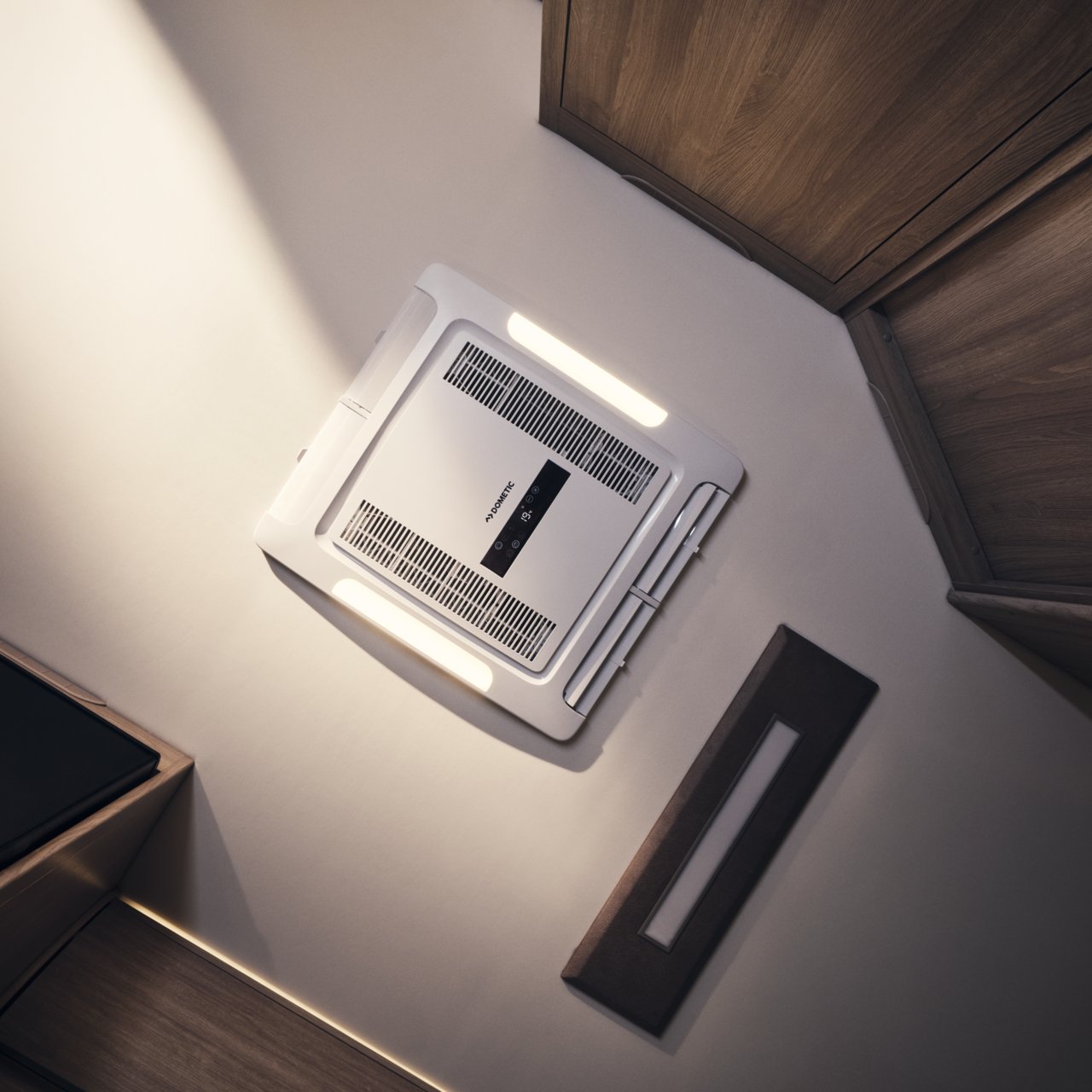
- Optimoitu ilmavirtaus lisää tehokkuutta ja vähentää melua
- Integroitu kosketusnäyttö – ainutlaatuinen markkinoilla
- Integroitu valaistus – lämpimän valkoiset LED-valot luovat herkän tunnelmavalaistuksen
- Pystysuorassa säädettävät poistoaukot mahdollistavat yksilöllisen ilmavirran säädön
- CleanAir-ilmanpuhdistinjärjestelmä – pitää matkailuajoneuvosi raikkaan tuoksuisena ja puhtaana
- Matala malli (korkeus vain 68 mm) jättää matkustamoon enemmän tilaa
- Uudelleenkäytettävä pölysuodatin – helppo irrottaa puhdistusta varten
Specifications
SKU: 9600051008
| Model | FJXADBD |
|---|---|
| Scope of delivery | ADB, Manuals, Remote control, installation material |
| SKUCertificates | CE;UKCA;ECER10;EMC;CB |
| Product Description | Ilmanohjain, elektroniset säätimet, LED-valo |
| Dimensions product depth, [mm] | 579 |
|---|---|
| Dimensions product height, [mm] | 48 |
| Dimensions product width, [mm] | 518 |
| Net weight, [kg] | 3.90 |
| Cut out depth, [mm] | 400 |
| Cut out width, [mm] | 400 |
| Connectivity Type | Bluetooth |
|---|
| Dimensions parcel depth, [mm] | 630 |
|---|---|
| Dimensions parcel height, [mm] | 140 |
| Dimensions parcel width, [mm] | 550 |
| Parcel weight, [kg] | 6 |


Highlights
Optimoitu ilmavirtaus
Matala ilmanohjain, jossa on tehokas etu- ja takailmavirtaus
Intuitiivinen kosketusohjaus
Aseta vain haluamasi lämpötila ja puhallintaso
CleanAir-tekniikka
Vähentää tehokkaasti bakteereja ja epämiellyttäviä hajuja
Säädettävät poistoaukot
Säädä vain ilmavirran suuntaa sormenpäillä
Integroitu valaistus
Lämpimän valkoiset LED-valot luovat kauniin ja herkän tunnelmavalaistuksen
Uudelleenkäytettävä pölysuodatin
Helppo irrottaa puhdistusta varten
Dometic Climate App
Ohjaa kattoilmastointilaitetta kätevästi älypuhelimellasi
Dometic CleanAir -ilmanpuhdistin
Uusi ilmanpuhdistusjärjestelmämme käyttää kehittynyttä kaksinapaista ionisoijaa, joka pitää matkailuajoneuvosi raikkaana ja puhtaana sekä vähentää samalla huomattavasti allergeeneja, viruksia, bakteereja ja epäpuhtauksia. Ionisoijat puhdistavat ilman useilla tavoilla. Ensinnäkin ne luovat positiivisia ja negatiivisia ioneja, jotka auttavat vähentämään patogeenejä, hajuja ja hometta. Bakteeri- ja virussolujen elämää ylläpitävä vety hävitetään, mikä vähentää niiden määrää. Lisäksi hajut vähenevät, kun ne hapettuvat joutuessaan kosketuksiin ladattujen ionien kanssa. Lopuksi positiiviset ja negatiiviset ionit kiinnittyvät ilmassa oleviin hiukkasiin. Niiden vetovoima tekee hiukkasista isompia. Tämä puolestaan mahdollistaa sen, että ilmastointijärjestelmän vakiopölysuodatin voi poistaa enemmän hiukkasia ilmasta.
2 questions
If you are travelling to cooler climates then this will not challenge the air conditioners to the extremes, a unit with a smaller power rating will do for these types of trips. You should not save on power, though, if you regularly travel to warmer climates and even less so if you have children or pets on board as staying in a recreational vehicle can quickly become uncomfortable on a hot summer day. When the nights are not cooler either, rest and recuperation is only possible with an adequate air conditioner.
Air conditioners work on basically the same principle as the cooling units of kitchen refrigerators. Their cooling efficiency is way higher though. In either system a refrigerant extracts heat from the space to be cooled and dissipates it to the outside. An RV air conditioner should additionally reduce the humidity. AC systems most commonly used for recreational vehicles:
Evaporation systems: Water is vapourised in a roof-mounted unit and collected in a filter. A fan draws ambient air in through the filter, which results in a heat exchange. Benefits: low current consumption, lightweight. Drawback: The energy efficiency depends on the ambient humidity; so the performance of the system varies. It drops when the humidity is > 85% – and that's exactly the level where air conditioning is needed. Moreover, evaporation systems will, by nature increase the humidity in the vehicle, regardless of the ambient conditions.
The temperature conditions in recreational vehicles and the reasons behind them RV and caravans are no houses and they don't have thick walls, even if they are reasonably insulated they will heat up in the sun. The temperature inside can quickly rise to 30°C or more and not only in the hot and sunny south, but also in moderate climate zones. Besides insulation, the temperature conditions inside the vehicle depend on other factors, too: the size and number of windows, for instance. A caravan with small windows will heat up less quickly than a RV with generously sized glass surfaces and it does of course matter where you park your vehicle – in the blazing sun or in the shade of a tree. Do you take every opportunity to air the vehicle out? Or are all the windows closed and the heat can spread throughout the interior?