Description
- Conception aérodynamique attrayante
- L’isolation des vibrations réduit le bruit du compresseur
- Modèles de pompe à chaleur et de climatisation haute capacité efficaces
- Structure robuste et durable
- Compatible avec le thermostat ACL monozone ou le thermostat CCC II multizone de Dometic
- Coque de polypropylène moulé par injection et base à nervures ultrarésistantes
- Ventilateur et moteur à haute capacité conçu avec le souffleur CFM 350
Spécifications
SKU: 9105305955
| Model | 15K Btu Heatpump with Control Box |
|---|---|
| Scope of delivery | 1 Air conditioner, 1 Warranty card, 1 Registration card |
| SKUCertificates | CSA |
| Product Description | Pompe à chaleur de 15 000 BTU, utilisation avec ou sans conduits - panneau de contrôle Multi-Zone CCC II préinstallé, thermostat mural CCC II requis. |
| Dimensions product depth, [mm] | 762 |
|---|---|
| Dimensions product height, [mm] | 355.60 |
| Dimensions product width, [mm] | 1016 |
| Dimensions product width, [in] | 40 |
| Net weight, [kg] | 41.73 |
| Net weight, [lbs] | 92 |
| Input voltage (AC), [V] | 115 |
|---|---|
| Input frequency, [Hz] | 60 |
| Hermetically Sealed | Oui |
|---|---|
| Refrigerant, type | R410A |
| GWP | 2088 |
| CO2 equivalent, [t] | 1,184 |
| AirFlow, [m<sup>3</sup>h] | 330 |
| Cooling Capacity ISO5151 Display | 4396.07 |
| Cooling Capacity Display | 15000 |
| Power consumption - Heat pump (ISO 5151) | 1243 |
| Dimensions parcel depth, [mm] | 772 |
|---|---|
| Dimensions parcel height, [mm] | 375 |
| Dimensions parcel width, [mm] | 1048 |
| Parcel weight, [kg] | 43.72 |
| Parcel weight, [lbs] | 96.39 |
Highlights
Chef de file de l’industrie
Le modèle Blizzard NXT de Dometic possède un moteur très puissant lui permettant d’être le chef de file de la ventilation
Conception novatrice
Conception épurée et performances optimales
Haute performance
Ventilateur à haute capacité
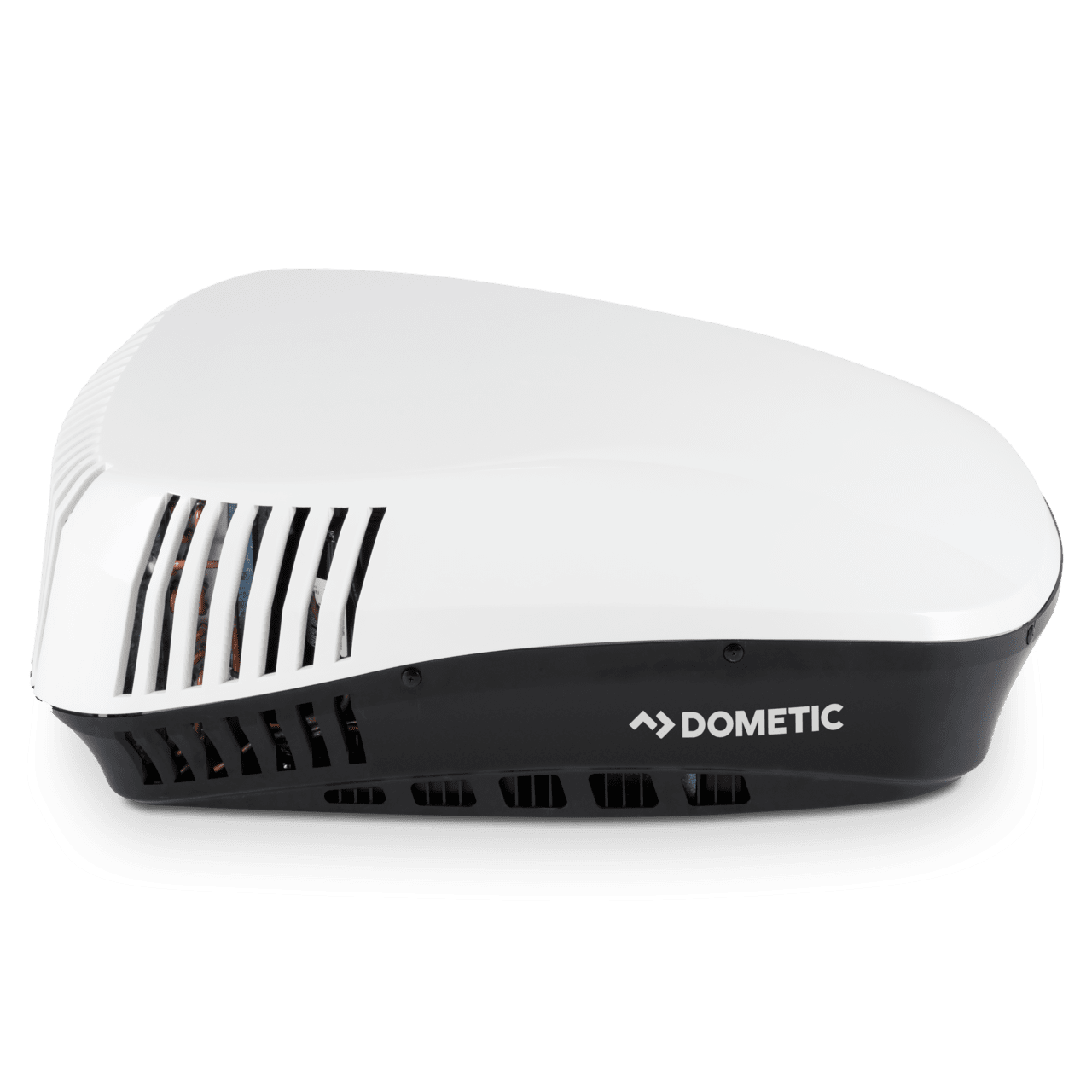
BLIZZARD NXT
Le climatiseur Blizzard NXT de Dometic peut être installé en hauteur dans des espaces restreints, le rendant idéal pour la passerelle haute, la cabine de pilotage, la salle des machines, ou les installations du pont extérieur. Le climatiseur possède une hauteur de 8 po/203 mm. Les souffleurs doubles peuvent être branchés à des conduits de différentes zones ou à des zones confinées telles que le tableau de bord ou les consoles de la passerelle haute. L’unité possède un serpentin d’évaporateur de grande taille à quatre rangées pouvant être utilisé pour évacuer la chaleur dans des conditions de faible ventilation. Un souffleur très efficace réduit la consommation d’énergie. De plus, il utilise deux sorties.
4 questions
If you are travelling to cooler climates then this will not challenge the air conditioners to the extremes, a unit with a smaller power rating will do for these types of trips. You should not save on power, though, if you regularly travel to warmer climates and even less so if you have children or pets on board as staying in a recreational vehicle can quickly become uncomfortable on a hot summer day. When the nights are not cooler either, rest and recuperation is only possible with an adequate air conditioner.
Air conditioners work on basically the same principle as the cooling units of kitchen refrigerators. Their cooling efficiency is way higher though. In either system a refrigerant extracts heat from the space to be cooled and dissipates it to the outside. An RV air conditioner should additionally reduce the humidity. AC systems most commonly used for recreational vehicles:
Evaporation systems: Water is vapourised in a roof-mounted unit and collected in a filter. A fan draws ambient air in through the filter, which results in a heat exchange. Benefits: low current consumption, lightweight. Drawback: The energy efficiency depends on the ambient humidity; so the performance of the system varies. It drops when the humidity is > 85% – and that's exactly the level where air conditioning is needed. Moreover, evaporation systems will, by nature increase the humidity in the vehicle, regardless of the ambient conditions.
The temperature conditions in recreational vehicles and the reasons behind them RV and caravans are no houses and they don't have thick walls, even if they are reasonably insulated they will heat up in the sun. The temperature inside can quickly rise to 30°C or more and not only in the hot and sunny south, but also in moderate climate zones. Besides insulation, the temperature conditions inside the vehicle depend on other factors, too: the size and number of windows, for instance. A caravan with small windows will heat up less quickly than a RV with generously sized glass surfaces and it does of course matter where you park your vehicle – in the blazing sun or in the shade of a tree. Do you take every opportunity to air the vehicle out? Or are all the windows closed and the heat can spread throughout the interior?
Travelling off the beaten track with all the comfort you are accustomed to – Dometic generators make it possible. They ensure reliable power supply wherever mains power is unavailable. This makes them a must-have accessory for outdoor enthusiasts striving for maximum freedom and independence.
Air conditioners have the highest start-up current of all electrical devices commonly used in recreational vehicles. However, this current level is only required for fractions of a second; the level required in continuous operation is much lower. As the mains hookups on most campsites are fitted with a delay fuse, the short-time peaks are normally no problem.