Description
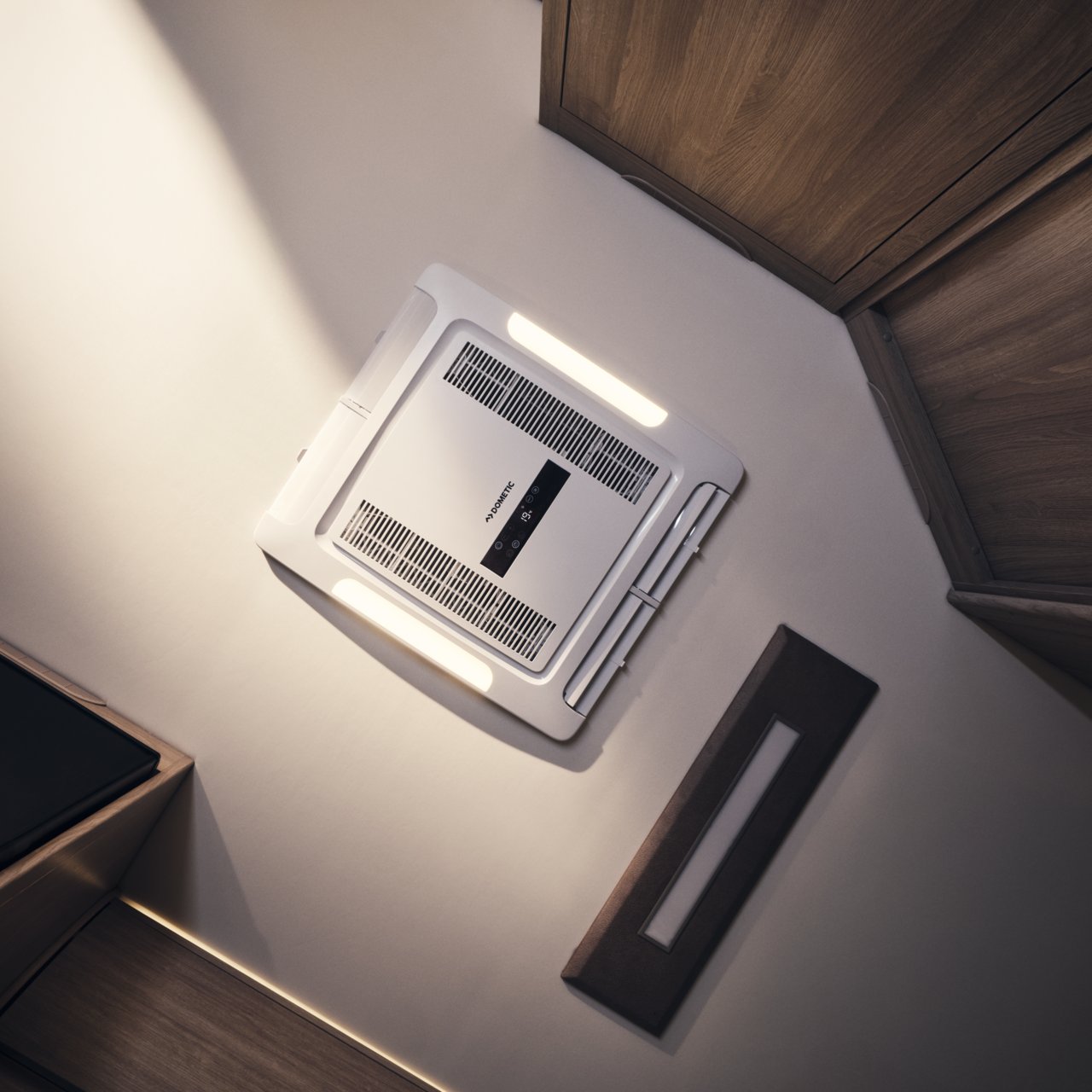
- Az optimalizált légáramlás fokozott hatékonyságot és csökkentett zajszintet jelent
- Integrált érintésvezérlő-kijelző - egyedülálló a piacon
- Beépített világítás – A melegfényű, fehér LED-ek gyönyörű, lágy hangulatvilágítást biztosítanak
- Függőlegesen állítható légbefúvók a légáramlás egyéni szabályozásához
- CleanAir légtisztító rendszer – friss és tiszta lesz a lakóautó illata
- Az alacsony kialakítás (mindössze 68 mm magas) nagyobb teret hagy az utastérben
- Újrafelhasználható porszűrő – könnyen eltávolítható a tisztításhoz
Specifications
SKU: 9600051008
| Model | FJXADBD |
|---|---|
| Scope of delivery | ADB, Manuals, Remote control, installation material |
| SKUCertificates | CE;UKCA;ECER10;EMC;CB |
| Product Description | Légőelosztó-doboz, elektronikus vezérlés, LED-világítás |
| Dimensions product depth, [mm] | 579 |
|---|---|
| Dimensions product height, [mm] | 48 |
| Dimensions product width, [mm] | 518 |
| Net weight, [kg] | 3.90 |
| Cut out depth, [mm] | 400 |
| Cut out width, [mm] | 400 |
| Connectivity Type | Bluetooth |
|---|
| Dimensions parcel depth, [mm] | 630 |
|---|---|
| Dimensions parcel height, [mm] | 140 |
| Dimensions parcel width, [mm] | 550 |
| Parcel weight, [kg] | 6 |


Highlights
Optimalizált légáramlás
Alacsony profilú légbefúvó-doboz erőteljes elülső és hátsó légáramlással
Intuitív érintésvezérlés
Egyszerűen beállíthatja a kívánt hőmérsékletet és légáramlást
CleanAir technológia
Hatékonyan a baktériumok és a kellemetlen szagok ellen
Állítható szellőzőkivezetések
Egyszerűen állítsa be a légáramlás irányát az ujjaival
Beépített világítás
A melegfényű, fehér LED-ek gyönyörű, lágy hangulatvilágítást biztosítanak
Újrahasználható porszűrő
Könnyen kivehető a tisztításhoz
Dometic Climate App
Kényelmesen vezérelheti tetőklímáját az okostelefonjáról
Dometic CleanAir légtisztító
Új légtisztító rendszerünk fejlett bipoláris ionizációs technológiát használ, hogy lakóautója friss és tiszta illatú maradjon, miközben nagymértékben csökkenti az allergének, vírusok, baktériumok és szennyező anyagok mennyiségét. Az ionizátorok többféle módszerrel tisztítják a levegőt. Először is, pozitív és negatív ionokat hoznak létre, ami csökkenti a kórokozókat, a szagokat keltő anyagokat és a penészgombát. A baktérium- és vírussejteket megfosztja az élethez fontos hidrogéntől, így csökken a számuk. Másodszor, a szagokat keltő anyagok redukálódnak, amikor a feltöltődött ionokkal érintkezve oxidálódnak. Végül, de nem utolsósorban a pozitív és negatív ionok a levegőben lévő részecskékhez kapcsolódnak. Vonzóerejük miatt a részecskék nagyobbak lesznek. Ez lehetővé teszi, hogy a légkondicionáló rendszer szabványos porszűrője több részecskét távolítson el a levegőből.
2 questions
If you are travelling to cooler climates then this will not challenge the air conditioners to the extremes, a unit with a smaller power rating will do for these types of trips. You should not save on power, though, if you regularly travel to warmer climates and even less so if you have children or pets on board as staying in a recreational vehicle can quickly become uncomfortable on a hot summer day. When the nights are not cooler either, rest and recuperation is only possible with an adequate air conditioner.
Air conditioners work on basically the same principle as the cooling units of kitchen refrigerators. Their cooling efficiency is way higher though. In either system a refrigerant extracts heat from the space to be cooled and dissipates it to the outside. An RV air conditioner should additionally reduce the humidity. AC systems most commonly used for recreational vehicles:
Evaporation systems: Water is vapourised in a roof-mounted unit and collected in a filter. A fan draws ambient air in through the filter, which results in a heat exchange. Benefits: low current consumption, lightweight. Drawback: The energy efficiency depends on the ambient humidity; so the performance of the system varies. It drops when the humidity is > 85% – and that's exactly the level where air conditioning is needed. Moreover, evaporation systems will, by nature increase the humidity in the vehicle, regardless of the ambient conditions.
The temperature conditions in recreational vehicles and the reasons behind them RV and caravans are no houses and they don't have thick walls, even if they are reasonably insulated they will heat up in the sun. The temperature inside can quickly rise to 30°C or more and not only in the hot and sunny south, but also in moderate climate zones. Besides insulation, the temperature conditions inside the vehicle depend on other factors, too: the size and number of windows, for instance. A caravan with small windows will heat up less quickly than a RV with generously sized glass surfaces and it does of course matter where you park your vehicle – in the blazing sun or in the shade of a tree. Do you take every opportunity to air the vehicle out? Or are all the windows closed and the heat can spread throughout the interior?