Description
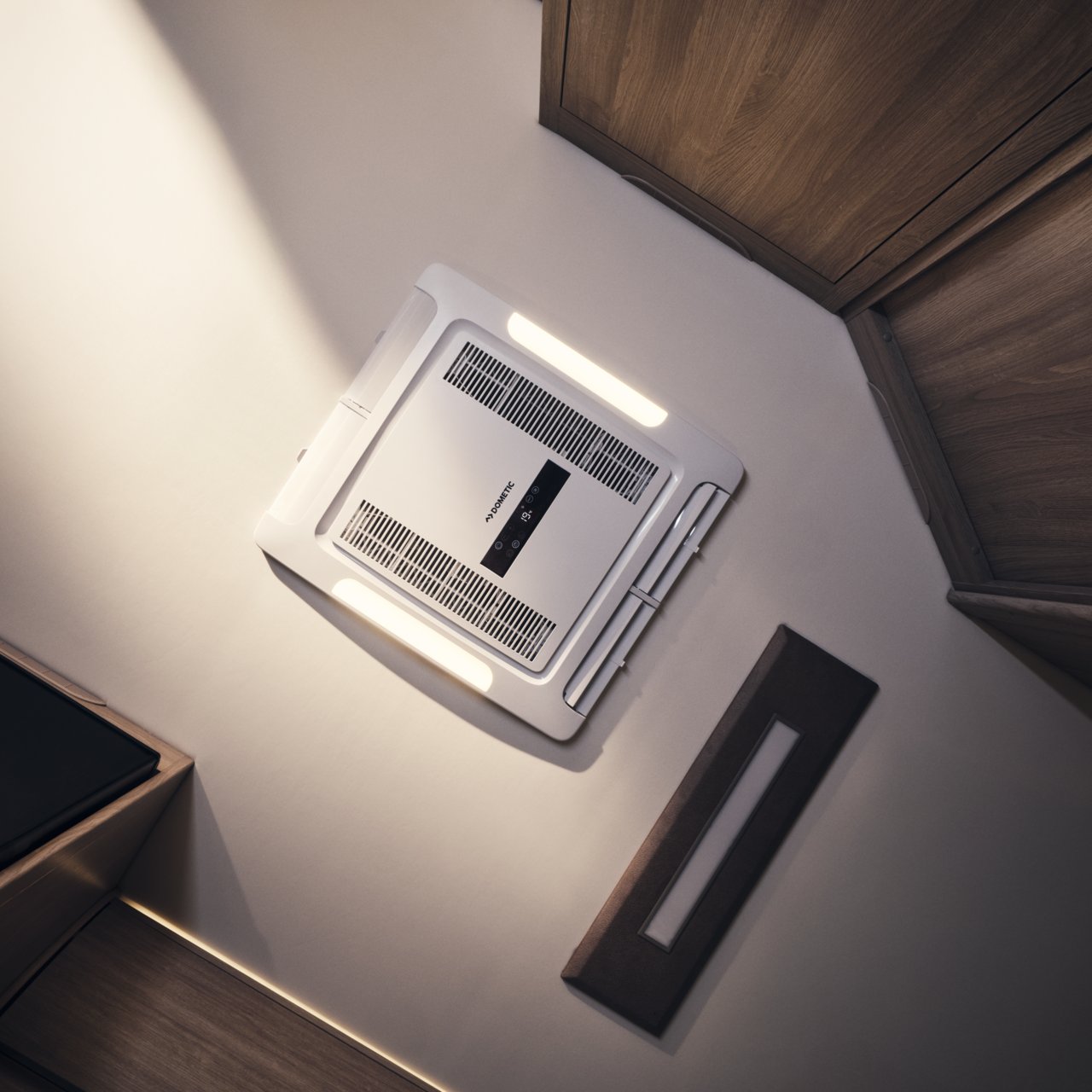
- fluxo de ar otimizado para uma melhor eficiência e redução do ruído
- Ecrã de controlo tátil integrado – único no mercado
- Iluminação integrada – LED brancos quentes para uma luz ambiente suave
- Difusores de saída ajustáveis verticalmente permitem controlo de fluxo de ar individual
- Sistema purificador de ar CleanAir – mantém o seu veículo de recreio fresco e limpo
- O design de baixo perfil (apenas 68 mm de altura) deixa mais espaço no habitáculo
- Filtro de pó reutilizável – fácil de remover para limpeza
Specifications
SKU: 9600051008
| Model | FJXADBD |
|---|---|
| Scope of delivery | ADB, Manuals, Remote control, installation material |
| SKUCertificates | CE;UKCA;ECER10;EMC;CB |
| Product Description | Caixa de distribuição de ar, controlos eletrónicos, luz LED |
| Dimensions product depth, [mm] | 579 |
|---|---|
| Dimensions product height, [mm] | 48 |
| Dimensions product width, [mm] | 518 |
| Net weight, [kg] | 3.90 |
| Cut out depth, [mm] | 400 |
| Cut out width, [mm] | 400 |
| Connectivity Type | Bluetooth |
|---|
| Dimensions parcel depth, [mm] | 630 |
|---|---|
| Dimensions parcel height, [mm] | 140 |
| Dimensions parcel width, [mm] | 550 |
| Parcel weight, [kg] | 6 |


Highlights
Fluxo de ar otimizado
Caixa de distribuição de ar de baixo perfil com potente circulação de ar frontal e traseira
Controlo tátil intuitivo
Basta definir a temperatura e o nível de ventilação pretendidos
Tecnologia CleanAir
Reduz eficazmente as bactérias e os odores desagradáveis
Difusores de saída ajustáveis
Basta ajustar a direção do fluxo de ar com a ponta dos dedos
Iluminação integrada
Os LED brancos quentes criam uma luz ambiente bonita e suave
Filtro de poeiras reutilizável
Fácil de remover para limpeza
Dometic Climate App
Controle de forma prática o seu sistema de ar condicionado de tejadilho a partir do seu smartphone
Purificador de ar CleanAir da Dometic
O nosso novo sistema de purificação de ar utiliza tecnologia avançada de ionizador bipolar para manter o seu veículo de recreio fresco e limpo, reduzindo de forma significativa os alergénios, vírus, bactérias e os poluentes. Os ionizadores purificam o ar através de vários métodos. Em primeiro lugar, criam iões positivos e negativos para ajudar a reduzir os agentes patogénicos, os odores e o bolor. As bactérias e as células virais são privadas do seu hidrogénio que lhes sustenta a vida, reduzindo o seu número. Em segundo lugar, os odores são reduzidos quando oxidam em contacto com os iões carregados. Por último, os iões positivos e negativos ligam-se às partículas no ar. As suas forças atrativas aumentam o tamanho das partículas. Isto, por sua vez, permite que o filtro de pó normal do seu sistema de ar condicionado remova mais partículas do ar.
2 questions
If you are travelling to cooler climates then this will not challenge the air conditioners to the extremes, a unit with a smaller power rating will do for these types of trips. You should not save on power, though, if you regularly travel to warmer climates and even less so if you have children or pets on board as staying in a recreational vehicle can quickly become uncomfortable on a hot summer day. When the nights are not cooler either, rest and recuperation is only possible with an adequate air conditioner.
Air conditioners work on basically the same principle as the cooling units of kitchen refrigerators. Their cooling efficiency is way higher though. In either system a refrigerant extracts heat from the space to be cooled and dissipates it to the outside. An RV air conditioner should additionally reduce the humidity. AC systems most commonly used for recreational vehicles:
Evaporation systems: Water is vapourised in a roof-mounted unit and collected in a filter. A fan draws ambient air in through the filter, which results in a heat exchange. Benefits: low current consumption, lightweight. Drawback: The energy efficiency depends on the ambient humidity; so the performance of the system varies. It drops when the humidity is > 85% – and that's exactly the level where air conditioning is needed. Moreover, evaporation systems will, by nature increase the humidity in the vehicle, regardless of the ambient conditions.
The temperature conditions in recreational vehicles and the reasons behind them RV and caravans are no houses and they don't have thick walls, even if they are reasonably insulated they will heat up in the sun. The temperature inside can quickly rise to 30°C or more and not only in the hot and sunny south, but also in moderate climate zones. Besides insulation, the temperature conditions inside the vehicle depend on other factors, too: the size and number of windows, for instance. A caravan with small windows will heat up less quickly than a RV with generously sized glass surfaces and it does of course matter where you park your vehicle – in the blazing sun or in the shade of a tree. Do you take every opportunity to air the vehicle out? Or are all the windows closed and the heat can spread throughout the interior?