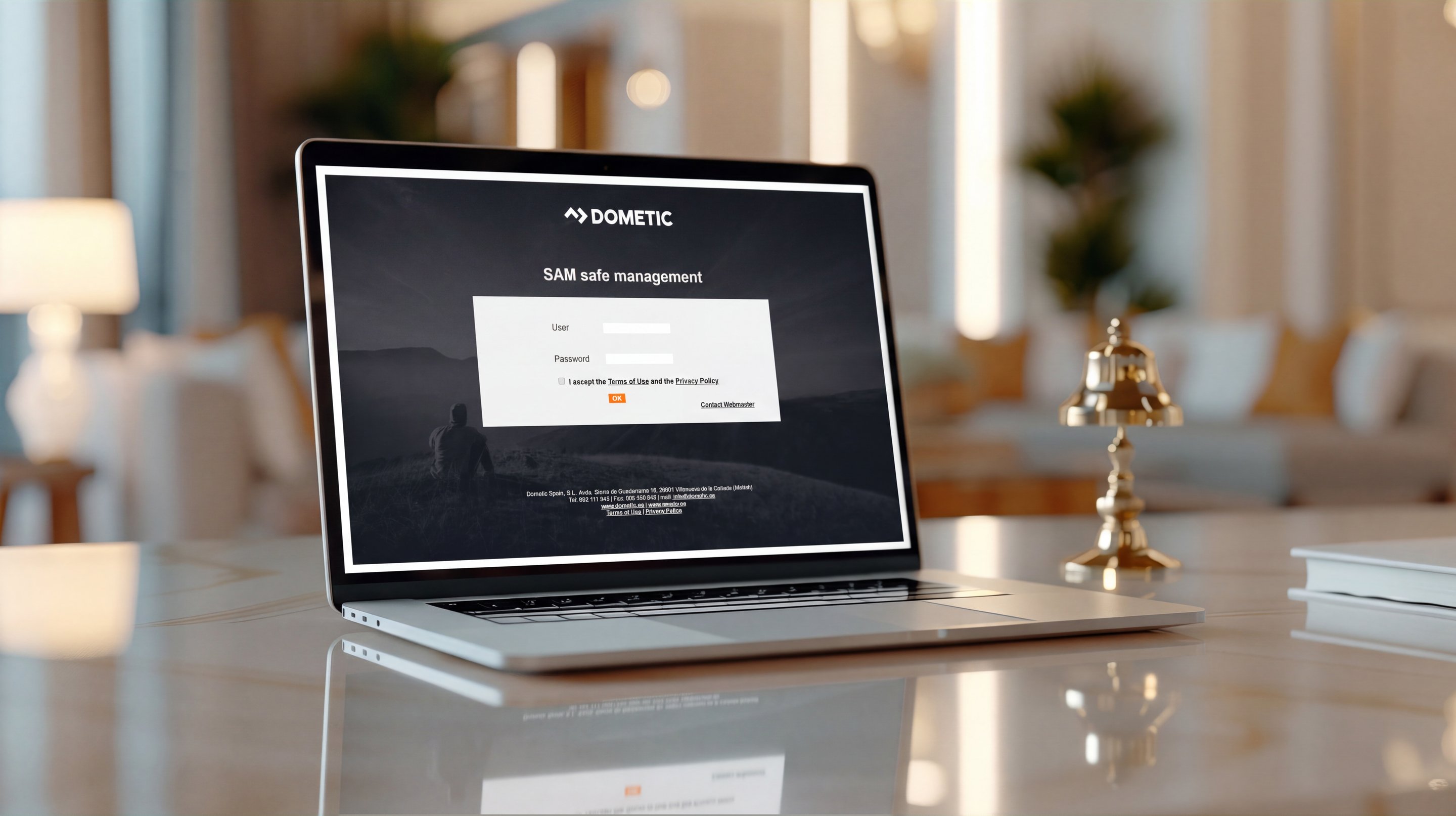
MORE THAN SECURE STORAGE
See how Dometic SAM, REOS and iAudit help hotels manage emergency safe openings, control access, track activity and reduce operational risk.
Why Hotel Safe Management Matters Beyond Basic Security
A modern hotel safe needs to do more than lock and unlock. It must also support the people responsible for managing guest requests, emergency access and security incidents.
A guest may forget the code used to lock the safe. A member of staff may change roles or leave the property. Hotel management may need to review an opening event after a guest query. In each situation, the hotel needs an authorized process that protects the guest, the property and the employee handling the request.
Traditional emergency access methods may depend on a permanent master code or physical master key. These methods can provide access, but they may offer less control over who uses that access and how the event is documented.
Dometic Premium safes can be combined with the Safe Management System, Remote Emergency Opening System, iAudit activity tracking and the Anti-Tamper function.
SAM, REOS and iAudit Compared
Function | Main purpose | Operational benefit |
|---|---|---|
SAM | Safe management platform | Central online access administration and security management |
REOS | Remote emergency opening | Unique emergency access codes for authorized opening events |
iAudit | Safe activity tracking | Recorded event history for accountability and reporting |
Anti-Tamper | Electronic interference protection | Blocks the interface after detected manipulation attempts |
SAM provides the management environment, REOS supports one-time emergency access, and iAudit supplies the activity record. Anti-Tamper protection adds a response to detected interference with the safe’s electronic components. Each function addresses a different operational requirement, but their combined value lies in control, documentation and accountability.
The result is not simply another safe feature. It is a security process designed around real hotel operations.
What Is SAM Safe Management?
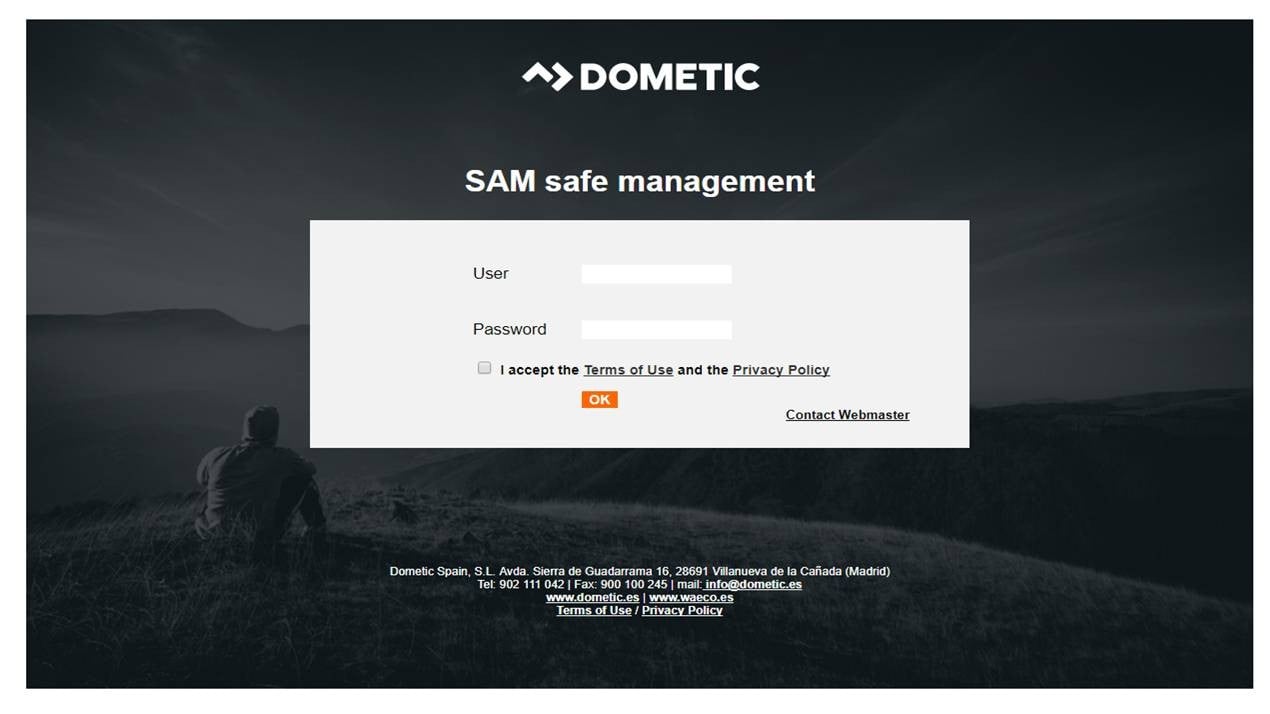
SAM is our Safe Management System for the ProSafe Premium safes. The platform supports iAudit Trail access and the generation of one-time emergency codes.
Rather than treating every safe as an isolated piece of room equipment, SAM provides hotel management with a central point for supported security functions. Authorized users can access the relevant tools without depending only on a shared code known by several employees.
This gives managers more control over emergency opening procedures and helps establish clearer responsibility across departments.
Centralized Safe Administration
Safe access responsibilities often involve several hotel functions. Front office teams may receive the first guest call, security staff may oversee the opening, and managers may need to review the event later.
A central management platform helps a property define who should have access to supported features. It also gives managers a practical way to align access with current responsibilities. For example, when an employee changes role or leaves the property, their platform access can be reviewed or removed. This is more manageable than relying on shared credentials that may continue circulating after team changes.
Central administration can therefore support:
Clear access responsibilities
Faster changes when staff roles change
Less reliance on shared information
A consistent process across shifts and departments
Better oversight of emergency access
This approach is especially useful for hotels with frequent shift changes, multiple operational teams or several properties following the same security standards.
A Secure Alternative to Traditional Master Codes
A permanent master code can be convenient, but its value depends on how carefully the property controls it. A code shared among multiple employees may become harder to manage over time, particularly if it stays unchanged through staffing changes.
SAM and REOS provide a different approach. Instead of using the same emergency code repeatedly, authorized hotel staff can generate a code for the specific opening event. This reduces dependence on reusable access information and gives the hotel a more controlled way to respond when a guest needs help.
What Is REOS?
REOS stands for Remote Emergency Opening System. It forms part of the Dometic Safe Management System and uses an encoded process to support emergency opening by authorized hotel staff.
The central benefit is straightforward: REOS generates a one-time emergency opening code instead of requiring employees to use one permanent master code for every incident.
The code supports a specific opening process and cannot simply become a reusable alternative guest code. This helps protect access while giving staff a practical way to assist a guest who has forgotten their personal identification number.
How REOS Works
The supported process is designed for situations where a guest cannot open the safe and an authorized hotel employee needs to help without relying on a reusable master code. The exact procedure should follow the hotel’s own guest-identification and security rules, but the REOS flow works as follows:
The guest contacts reception because the safe cannot be opened.
The authorized employee gives the guest the REOS start code to enter on the safe keypad. This does not open the safe; it only starts the protected REOS sequence.
After the REOS start code is entered, the safe displays a 10-digit request code. The guest reads this 10-digit code to the authorized employee (or the employee reads it directly if they are present in the room).
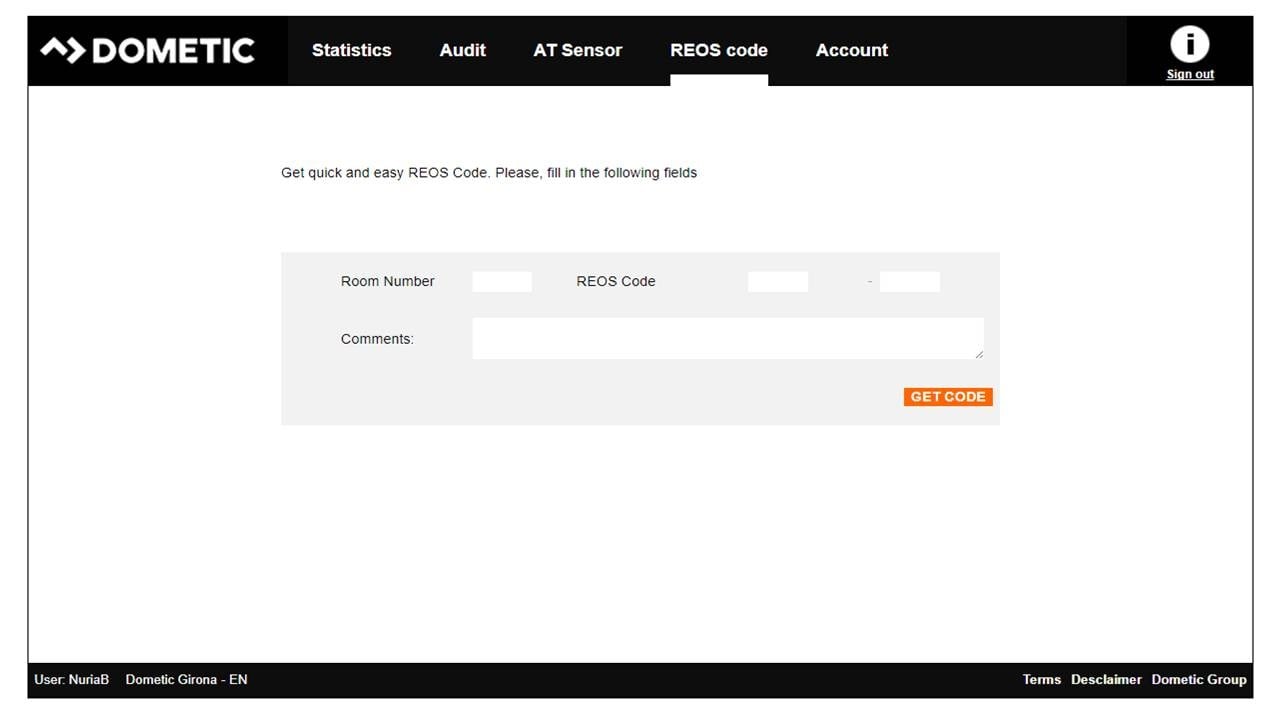
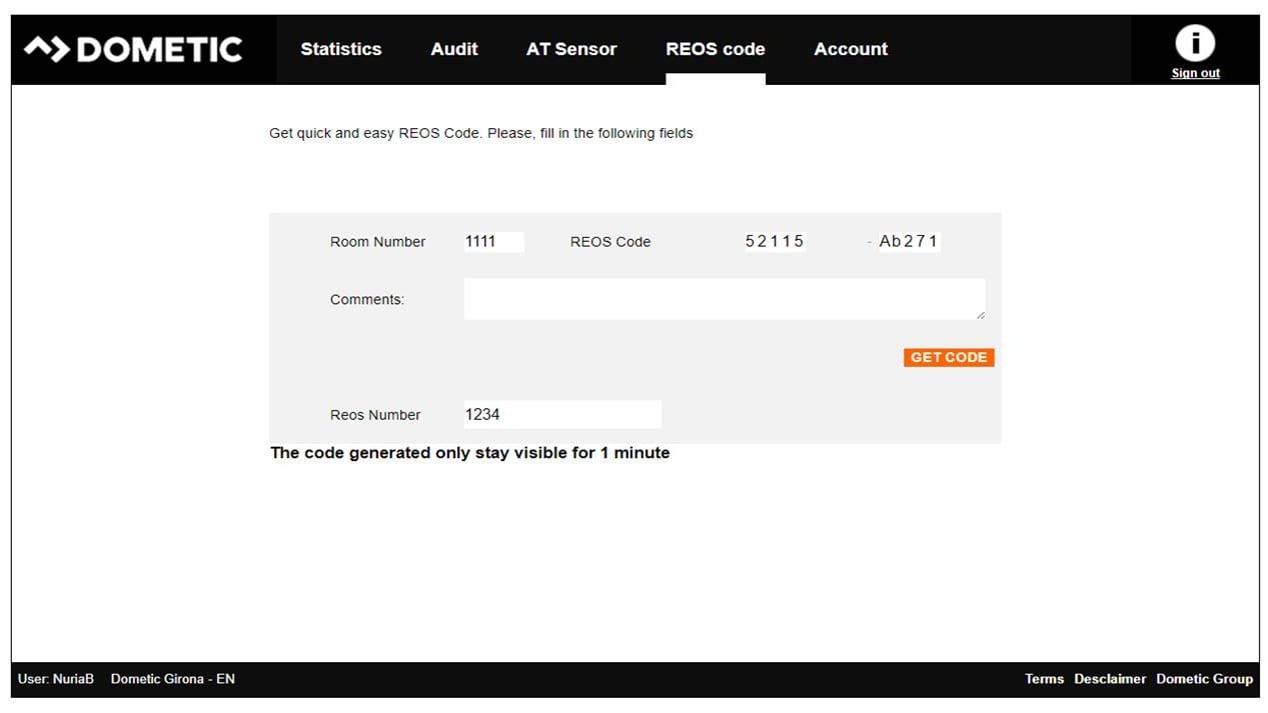
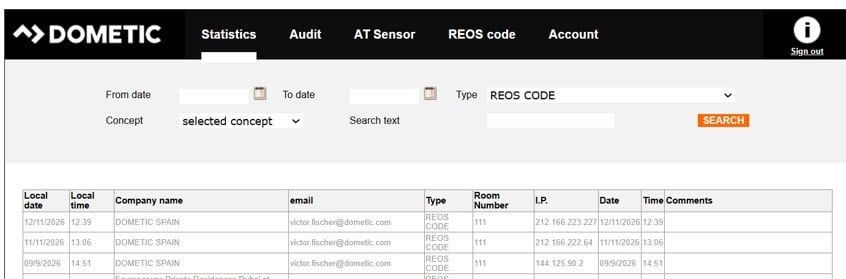
The authorized employee logs in to the SAM platform and enters the 10-digit request code from that specific safe.
SAM generates a one-time emergency opening code. This code is linked to the same safe and the same REOS request, so it cannot be reused for later openings or applied to another safe.
The authorized employee provides the one-time emergency opening code to the guest (or enters it on the keypad if present in the room). The code is valid only for a short period and is used to open the safe and complete the guest request.
The emergency opening is recorded in the SAM/REOS activity history, supporting later review of when the opening took place and which authorized process was used.
This structured approach gives staff a defined route from guest request to safe opening. It also reduces the need for improvised procedures during a busy shift.
For management teams, one-time access can support:
More controlled emergency openings
Less dependence on widely shared master codes
Clear responsibility for each request
Better alignment with documented operating procedures
Greater confidence when reviewing an incident
These benefits become more valuable as a property grows, adds rooms or operates with several shifts and departments.
Remote Guest Support
Consider a guest who returns to an apartment hotel late at night and realizes that they have forgotten their safe code. In a conventional process, an employee may need to walk to the room with a physical key or other opening device.
A REOS-supported process may allow authorized staff to assist without depending on a reusable master code. Depending on the property’s procedures and the safe configuration, the required information can be communicated and a one-time opening code generated through SAM.
This can be useful for apartment hotels, limited-service properties and overnight operations where fewer employees may be available. It can also reduce unnecessary room visits while maintaining an authorized access process.
Properties must still follow their identification and security requirements before providing emergency access. REOS supports the opening process, but the hotel remains responsible for confirming the guest’s identity and applying its operating procedures.
What Is iAudit?
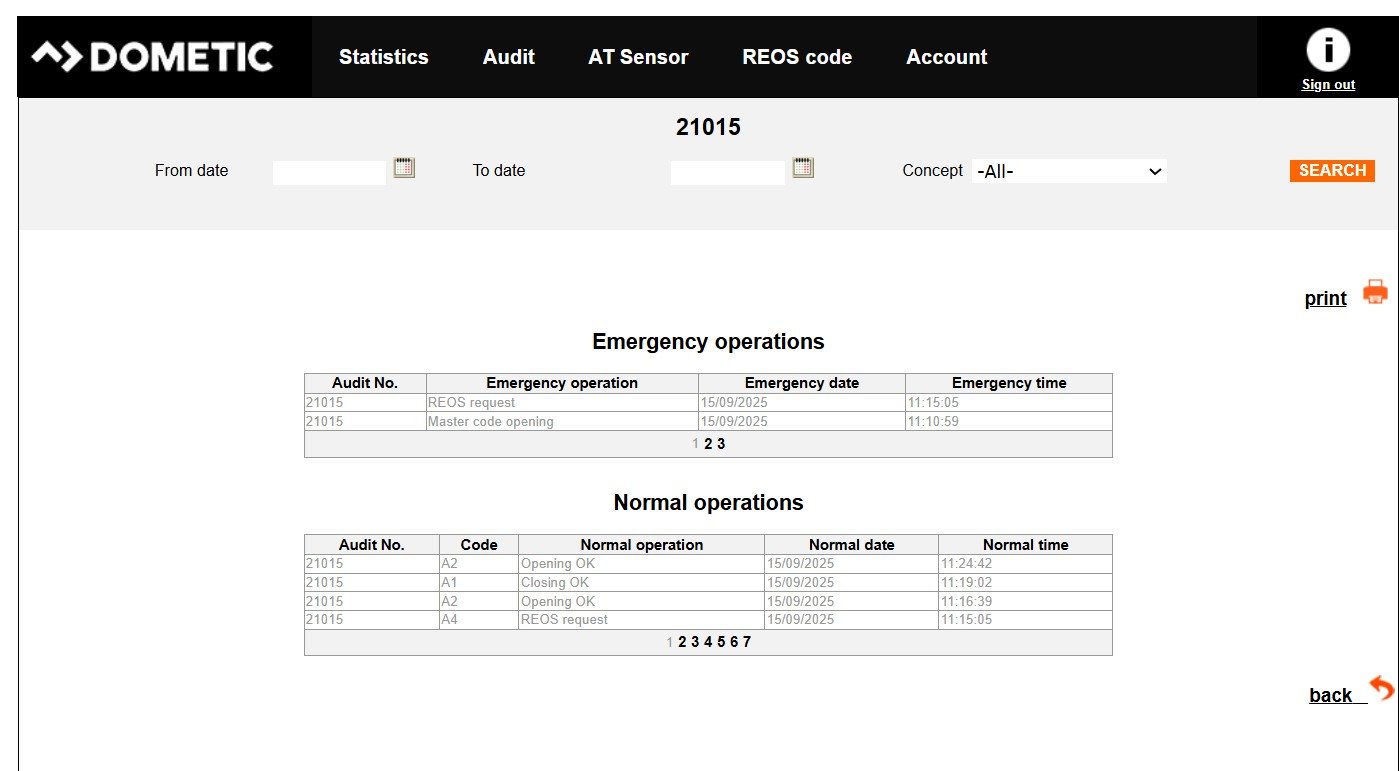
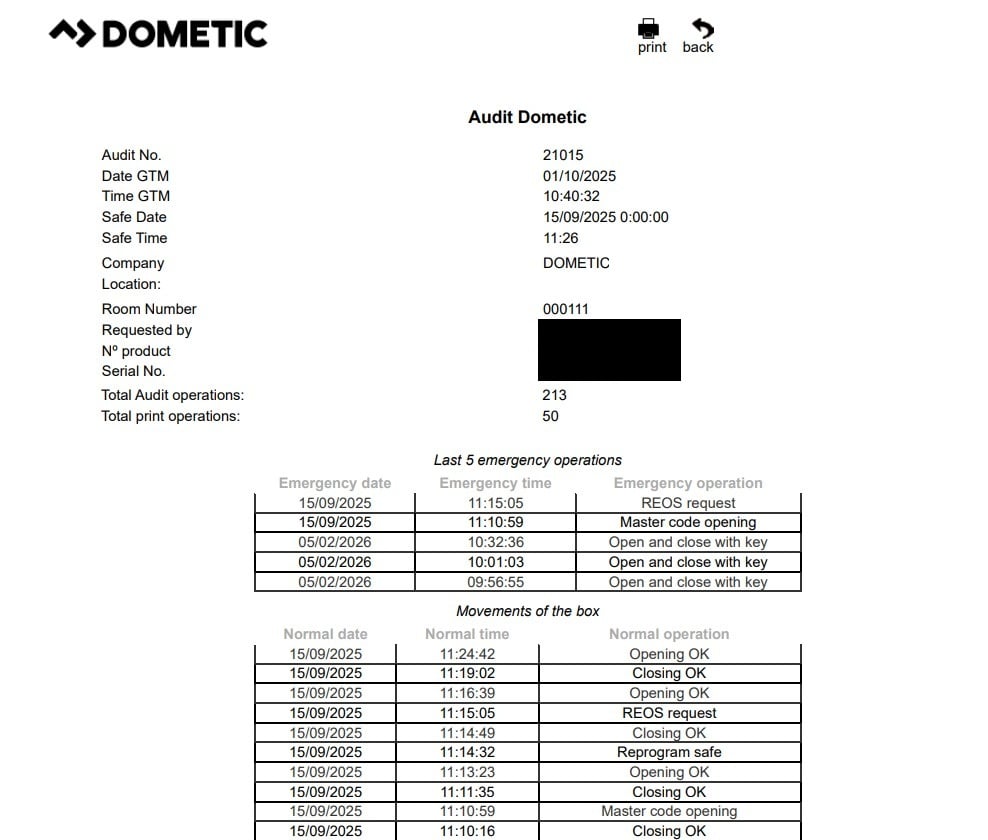
iAudit is the activity-tracking capability available with Dometic Premium safes. The integrated microchip can store the last 1,000 safe events, giving authorized hotel staff access to digital history when they need to review an incident.
This function helps turn a guest statement or staff recollection into a review supported by recorded information. For hotel operators, that record can provide valuable context. It can show whether the safe was operated, whether emergency access took place and where a particular action fits within the event history.
Why Audit Trails Matter
A guest may report that an item is missing from a room safe. The property may also need to review an emergency opening completed during an earlier shift. Without an activity record, management may need to rely mainly on recollections, written notes or incomplete handover information.
An audit trail gives the hotel a factual starting point.
It does not replace proper investigation, but it can help management establish a sequence of safe-related events. This may support internal reviews, guest communication, insurance documentation and security follow-up.
For employees, this also provides protection. A clearly recorded event can show that an authorized procedure took place at a particular stage in the safe’s operating history.
The business value comes from better transparency. Managers have more information available, staff work within a clearer process, and guest queries can be handled with greater professionalism.
What Information Can Be Recorded?
The audit history can support the review of activities such as:
Safe opening
Safe closing
Emergency access
Code-related activity
Operational or reset events
Attempts to interact with the safe
Hotel teams should consult the documentation for the selected model to confirm the event information available from that safe.
Authorized staff can retrieve the audit history for review. The recorded data can then support a report or incident file created under the hotel’s established procedure.
This creates a fuller record than a handwritten note stating only that the safe was opened.
Anti-Tamper Protection: Security Beyond the Keypad
Emergency access and activity records address only part of hotel safe security. Properties also need protection against attempts to interfere with the safe’s electronics.
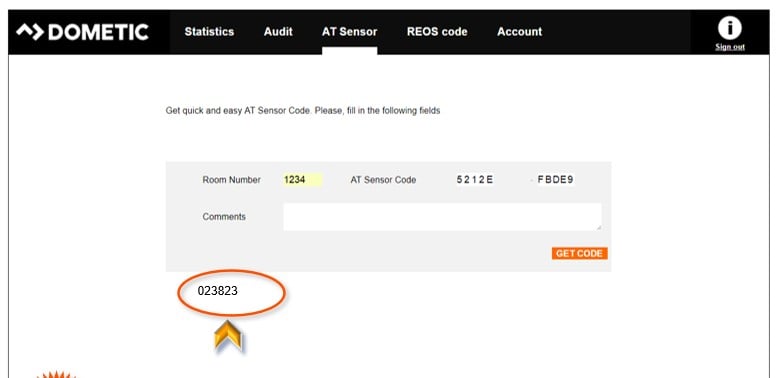
The optional Anti-Tamper system available for supported Dometic Premium safes detects unauthorized interference, including attempts to access the control board or internal electronic components. If the system detects manipulation, it blocks the user interface. The safe then requires a reset through the Safe Management System before it can be operated again.
Why These Features Matter for Modern Hotel Operations
A hotel safe may appear to be a small part of a guest room specification. However, its impact becomes more visible when an incident occurs.
At that point, the property needs more than a secure steel box. It needs an authorized way to provide access, a record of what happened and controls that protect both guests and employees.
For purchasing managers, technical teams and interior designers, this changes the safe-selection discussion. The decision no longer centers only on dimensions, price and appearance. It also includes questions such as:
How will staff handle forgotten guest codes?
Who can authorize an emergency opening?
Can access permissions be reviewed when roles change?
Will the property have a record if an incident occurs?
What happens if someone interferes with the electronics?
Can the solution support the hotel’s security procedures over time?
Answering these questions during specification can prevent operational gaps after installation.
Choose a Safe That Supports the People Managing It
A reliable in-room safe should protect the guest’s valuables and make professional incident handling easier for hotel staff.
Contact your local Dometic representative to discuss how Dometic Premium safes, SAM, REOS and iAudit can support your property’s security and operating requirements.