Beschrijving
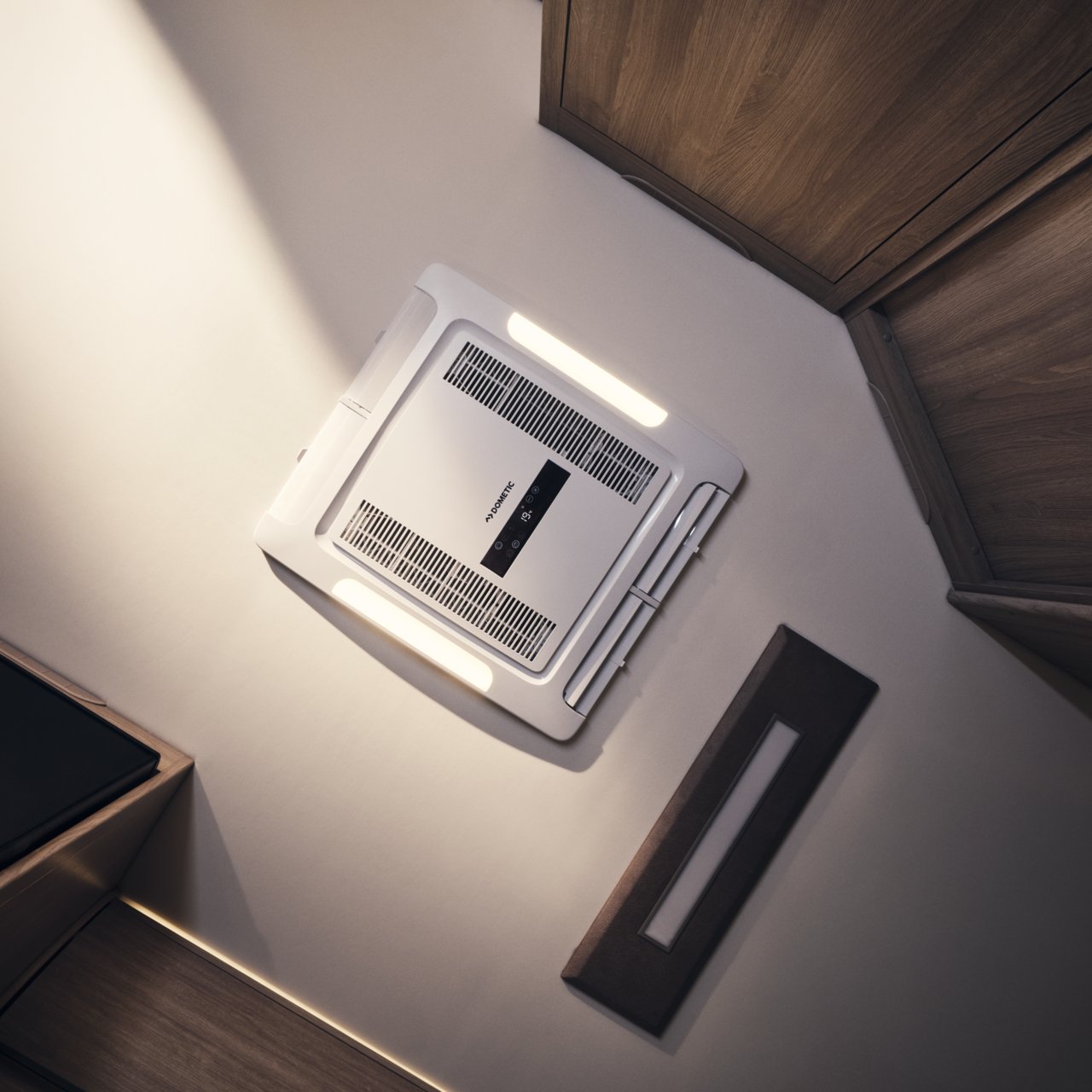
- Geoptimaliseerde luchtstroom voor meer efficiëntie en minder lawaai
- Geïntegreerd touchscreen-display – uniek in de markt
- Geïntegreerde verlichting – warmwitte leds voor zacht omgevingslicht
- Verticaal verstelbare ventilatieopeningen voor het individueel regelen van de luchtstroom
- CleanAir luchtreinigingssysteem – houdt jouw camper fris en schoon
- Onopvallend ontwerp (slechts 68 mm hoog) nauwelijks van invloed op beschikbare hoofdruimte in de cabine
- Herbruikbaar stoffilter – eenvoudig te verwijderen voor reiniging
Specificaties
SKU: 9600051008
| Model | FJXADBD |
|---|---|
| Scope of delivery | ADB, Manuals, Remote control, installation material |
| SKUCertificates | CE;UKCA;ECER10;EMC;CB |
| Product Description | Luchtverdeelbox, elektronische bediening, led-verlichting |
| Dimensions product depth, [mm] | 579 |
|---|---|
| Dimensions product height, [mm] | 48 |
| Dimensions product width, [mm] | 518 |
| Net weight, [kg] | 3.90 |
| Cut out depth, [mm] | 400 |
| Cut out width, [mm] | 400 |
| Connectivity Type | Bluetooth |
|---|
| Dimensions parcel depth, [mm] | 630 |
|---|---|
| Dimensions parcel height, [mm] | 140 |
| Dimensions parcel width, [mm] | 550 |
| Parcel weight, [kg] | 6 |


Highlights
Geoptimaliseerde luchtstroom
Luchtverdeelbox met laag profiel en krachtige luchtstroom voor en achter
Intuïtief touchscreen
Stel eenvoudig de gewenste temperatuur en ventilatiestand in
CleanAir technologie
Vermindert effectief bacteriën en geuren, zodat je camper of caravan fris en schoon blijft ruiken
Verstelbare uitblaasroosters
Pas de richting van de luchtstroom eenvoudig aan
Geïntegreerde verlichting
Warmwitte leds creëren een prachtig, zacht omgevingslicht
Herbruikbaar stoffilter
Eenvoudig te verwijderen voor reiniging
Dometic Climate App
Regel je klimaat eenvoudig via de app, waar je ook bent
Dometic CleanAir luchtreiniger
Ons nieuwe luchtreinigingssysteem maakt gebruik van geavanceerde bipolaire ionisatortechnologie om jouw camper fris te laten ruiken en schoon houden. Tegelijkertijd worden allergenen, virussen, bacteriën en verontreinigende stoffen sterk te verminderd. Ionisatoren zuiveren de lucht op verschillende manieren. Ten eerste creëren ze positieve en negatieve ionen om ziekteverwekkers, nare luchtjes en schimmels te helpen verminderen. Bacteriën en viruscellen worden beroofd van hun levensondersteunende waterstof, waardoor hun aantal afneemt. Ten tweede verminderen nare luchtjes als ze oxideren bij contact met de geladen ionen. Last but not least hechten de positieve en negatieve ionen zich aan de deeltjes in de lucht. Hun aantrekkingskracht maken de deeltjes groter. Hierdoor kan het standaard stoffilter van jouw aircosysteem meer deeltjes uit de lucht verwijderen.
2 vragen
If you are travelling to cooler climates then this will not challenge the air conditioners to the extremes, a unit with a smaller power rating will do for these types of trips. You should not save on power, though, if you regularly travel to warmer climates and even less so if you have children or pets on board as staying in a recreational vehicle can quickly become uncomfortable on a hot summer day. When the nights are not cooler either, rest and recuperation is only possible with an adequate air conditioner.
Air conditioners work on basically the same principle as the cooling units of kitchen refrigerators. Their cooling efficiency is way higher though. In either system a refrigerant extracts heat from the space to be cooled and dissipates it to the outside. An RV air conditioner should additionally reduce the humidity. AC systems most commonly used for recreational vehicles:
Evaporation systems: Water is vapourised in a roof-mounted unit and collected in a filter. A fan draws ambient air in through the filter, which results in a heat exchange. Benefits: low current consumption, lightweight. Drawback: The energy efficiency depends on the ambient humidity; so the performance of the system varies. It drops when the humidity is > 85% – and that's exactly the level where air conditioning is needed. Moreover, evaporation systems will, by nature increase the humidity in the vehicle, regardless of the ambient conditions.
The temperature conditions in recreational vehicles and the reasons behind them RV and caravans are no houses and they don't have thick walls, even if they are reasonably insulated they will heat up in the sun. The temperature inside can quickly rise to 30°C or more and not only in the hot and sunny south, but also in moderate climate zones. Besides insulation, the temperature conditions inside the vehicle depend on other factors, too: the size and number of windows, for instance. A caravan with small windows will heat up less quickly than a RV with generously sized glass surfaces and it does of course matter where you park your vehicle – in the blazing sun or in the shade of a tree. Do you take every opportunity to air the vehicle out? Or are all the windows closed and the heat can spread throughout the interior?